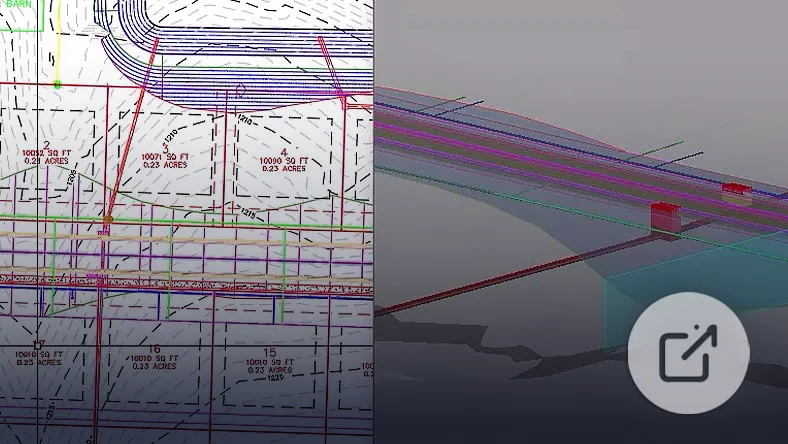
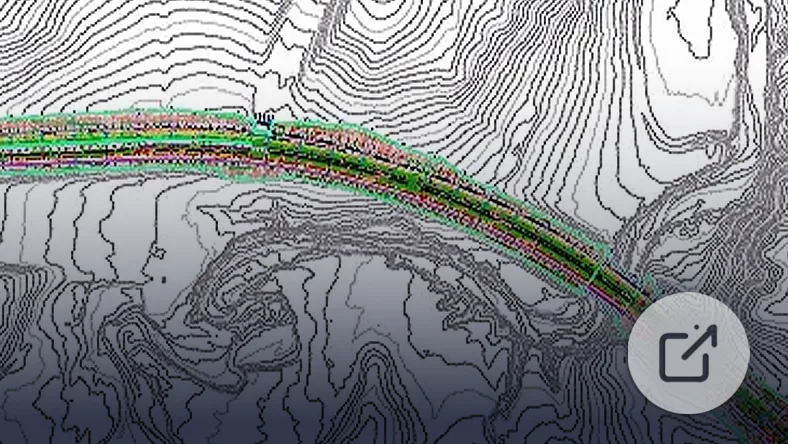
The Civil 3D Model Viewer provides a dedicated 3D environment for visualising, validating, and reviewing models throughout the design process. Examine complex design elements including corridors and subassemblies with greater visibility and engineering context while maintaining familiar Civil 3D workflows.
From planning and conceptual design through to engineering analysis, Autodesk AI supports Civil 3D workflows across the AECO project lifecycle, helping teams work more effectively during design development and project delivery.
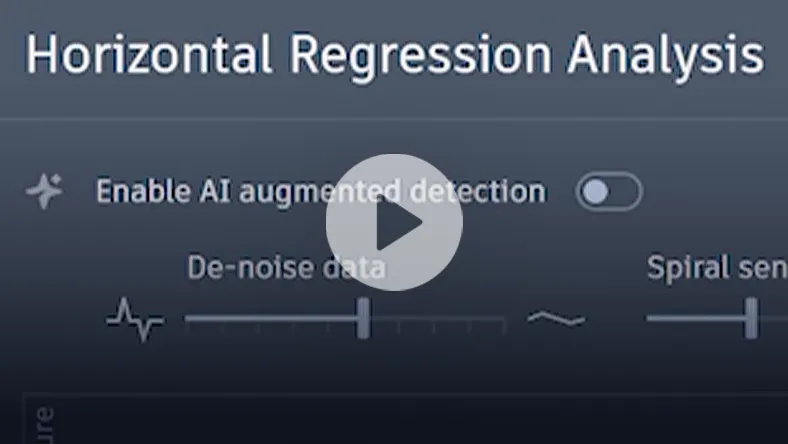
Generate smooth horizontal alignments from existing survey information for linear infrastructure projects including rail, roads, highways, and pipelines. Civil 3D calculates tangents, curves, and transition spirals that closely match measured survey points, helping engineers recreate or refine geometry with minimal variation from real world conditions.
*Powered by AI. Responses may contain inaccuracies. Please verify information independently.
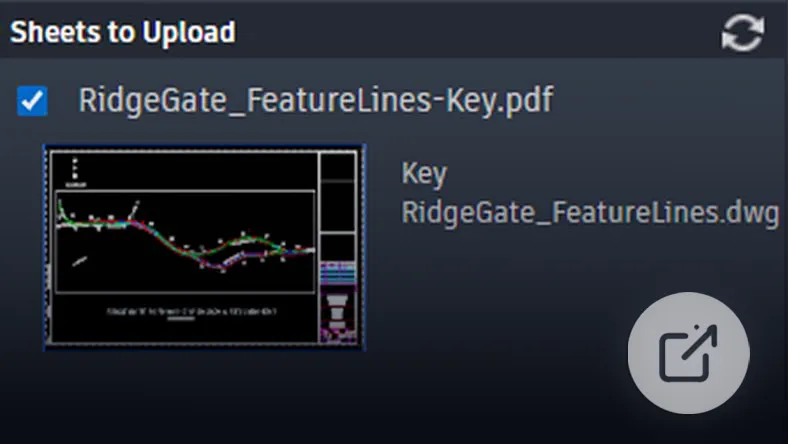
Included with standalone Civil 3D subscriptions, Forma Data Management Essentials provides a centralised cloud environment for organising, viewing, and sharing project information. Capabilities include 2D and 3D viewing, markups, search and filtering, folder permissions, issue tracking, and controlled information exchange.
Create, edit, and save large surface models more efficiently using TIN surface companion (.mms) and grid surface (.grs) files. Civil 3D stores surface data externally alongside the drawing file, improving performance when working with large terrain models and reducing unnecessary processing when geometry remains unchanged.
Import point cloud data from laser scanning and reality capture technologies to model existing terrain, surfaces, and structures. Use point cloud information within Civil 3D to reference real world site conditions, support accurate design decisions, and strengthen existing conditions modelling workflows.
Carry out terrain and surface analysis using elevation, direction, slopes, slope arrows, contours, watersheds, and water drop paths. Analyse surface behaviour and terrain conditions to support engineering assessment, planning, and design activities.
Refine existing surface definitions using controlled editing operations that preserve original source information. Add edits within the surface definition to review, manage, and reorder modifications without altering underlying surface data components.
Control the amount of surface geometry displayed within Civil 3D. Apply higher or reduced levels of detail to improve performance when working with large surfaces while retaining the visual accuracy required for current engineering tasks.nctionality.
Use surface masks to hide or visually isolate selected surface areas without changing underlying data. Apply masks to conceal regions or display portions of a surface using specified render materials, helping teams focus on relevant drawing information.
Create Civil 3D surfaces using points, breaklines, boundaries, and contours, with support for TIN, Grid, Cropped, and Corridor surface types. Surface modelling tools help represent terrain conditions, infrastructure geometry, and site information for design, analysis, and documentation workflows.
Use the Volumes Dashboard to analyse volume surfaces and bounded regions within Civil 3D. Calculate cut, fill, and net volumes, review calculation results, generate reports, and insert volume information into drawings to monitor surface changes.
Analyse terrain drainage behaviour using watershed tools within Civil 3D. Evaluate runoff paths, drainage patterns, and contributing catchment areas to understand how water moves across surface models for planning and engineering design.
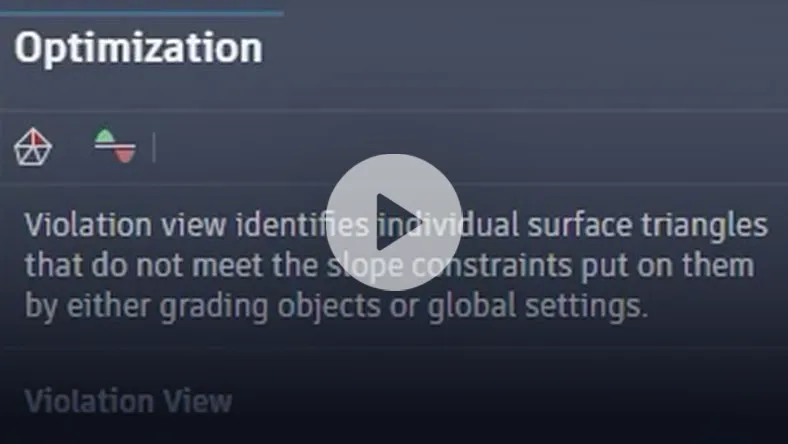
Automate grading assessment for land development projects using optimisation algorithms that establish smooth surface conditions while meeting defined grading requirements and engineering criteria.
Define survey point connectivity and symbology using field captured information aligned with feature names and field codes configured within Civil 3D.
View and interpret geotechnical information directly within the Civil 3D environment to support subsurface analysis, ground investigation review, and civil engineering design workflows.
Design finished ground surfaces using specialised grading tools and commands that support the efficient management of grading groups, styles, and criteria sets.
Organise and manage parcels, alignments, gradings, and feature lines that share a common topology within named site collections.
Download, create, analyse, and adjust survey information while improving the transfer of field captured data between site operations and office based design environments.
Use assemblies and subassemblies to establish the core building elements of roadway, transport, and alignment based infrastructure designs.
Develop dynamic, data rich corridor models for road, highway, and rail infrastructure projects. Build rail corridor models that incorporate track layouts, switches, turnouts, and cant calculations for accurate engineering design.
Create and manage corridor transitions when adjusting subassembly parameters between design values. Additional controls make transition movement and transition ordering easier to manage.
Extract corridor feature lines for use in grading objects and related design projects. Feature lines can be extracted collectively, individually, or from selected corridor regions and polygon areas.
Create dynamic three way intersections, four way intersections, and roundabout layouts for roadway and transport infrastructure designs.
Model roundabouts according to defined design standards and integrate them into existing corridor models. Designs update automatically when corridor alignments are modified.
Manage assemblies and subassemblies more effectively by sharing custom subassemblies through common project locations. Corridor models using shared components can adopt updated versions more efficiently.
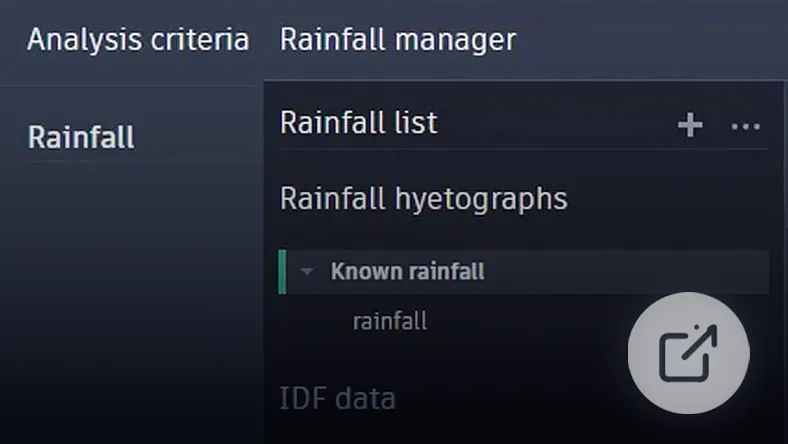
Carry out a broad range of stormwater and water management tasks including storm sewer modelling, watershed analysis, detention pond modelling, and culvert, inlet, and channel analysis.
Create 2D and 3D utility network models for stormwater systems, sanitary sewers, and related underground infrastructure networks.
Create 3D pressure network models for water transmission and utility infrastructure systems. Additional layout and editing controls support pressure network merging, DREF synchronisation improvements, and enhanced part symbol visibility.
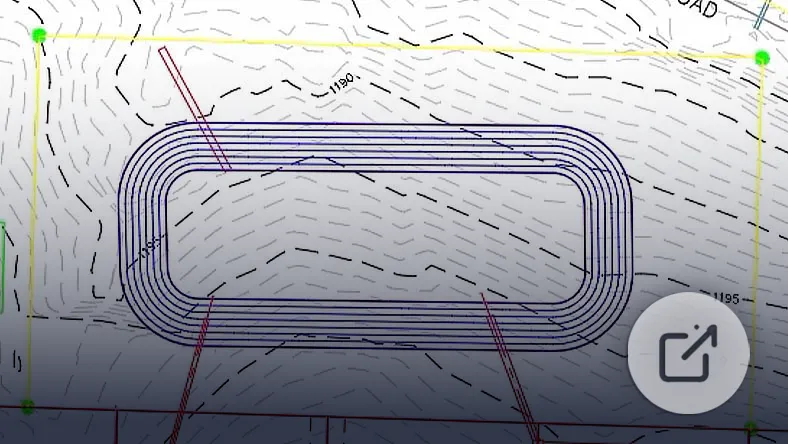
Add, configure, and modify underground storage components within drainage system models to capture, contain, and temporarily store stormwater runoff.
Create plan only, plan and profile, profile only, and section sheets using automated plan production capabilities within Civil 3D.
Extract, calculate, and report material quantities and volume information from surfaces, corridors, and sectional datasets.
Organise, manage, and maintain drawing sheets using Sheet Set Manager to support efficient documentation and controlled drawing workflows.
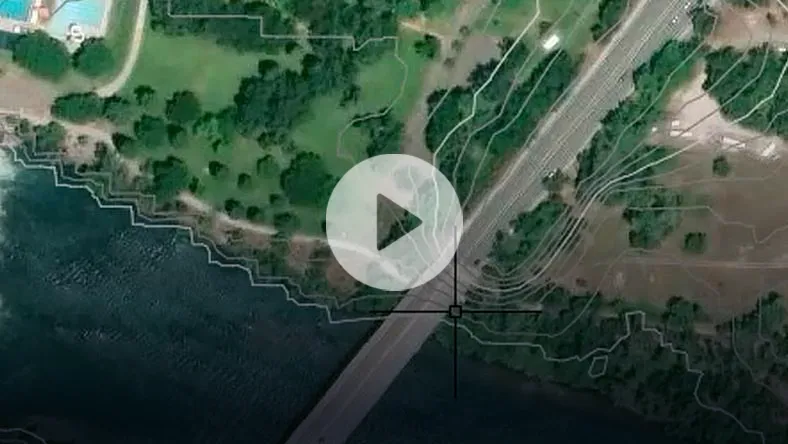
Support site planning and infrastructure design using real world contextual basemaps. Access high resolution satellite imagery, aerial photography, OpenStreetMap layers, and monochrome map styles.
Export Civil 3D design information for use in Autodesk 3ds Max to produce professional visualisations and presentation quality project outputs.
Import ArcGIS datasets into Civil 3D using Autodesk Connector for ArcGIS, then publish or export design information back into ArcGIS environments.
Incorporate conceptual design and context modelling into Civil 3D workflows. Use existing conditions information to assess alternatives, strengthen engineering decision making, and support detailed design and documentation activities.r.
Import and export IFC 4.3 data to exchange Civil 3D infrastructure models with IFC certified software platforms and applications.
Use Autodesk ReCap Pro point cloud information within Civil 3D to support reality capture workflows, existing conditions modelling, and surface development activities.
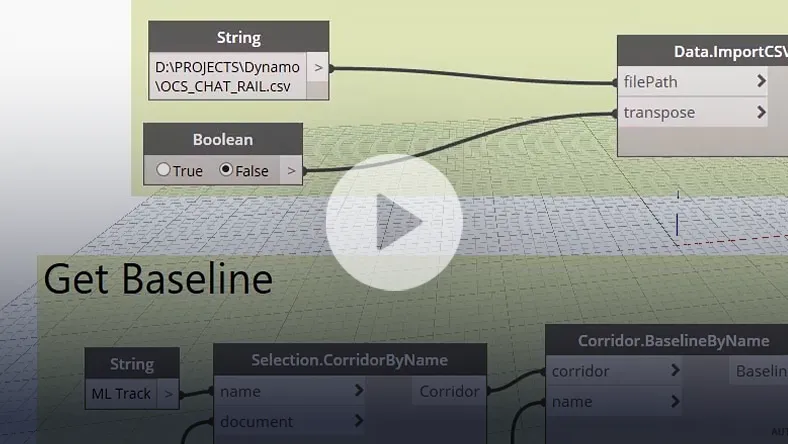
Automate workflows, create custom commands, interact with design objects and datasets, and integrate Civil 3D with additional software environments.
Extend and customise Civil 3D functionality using Autodesk approved apps, add ons, and extensions.
Speak to us about your operational requirements or outcomes and we'll tailor a solution best suited to your business.