
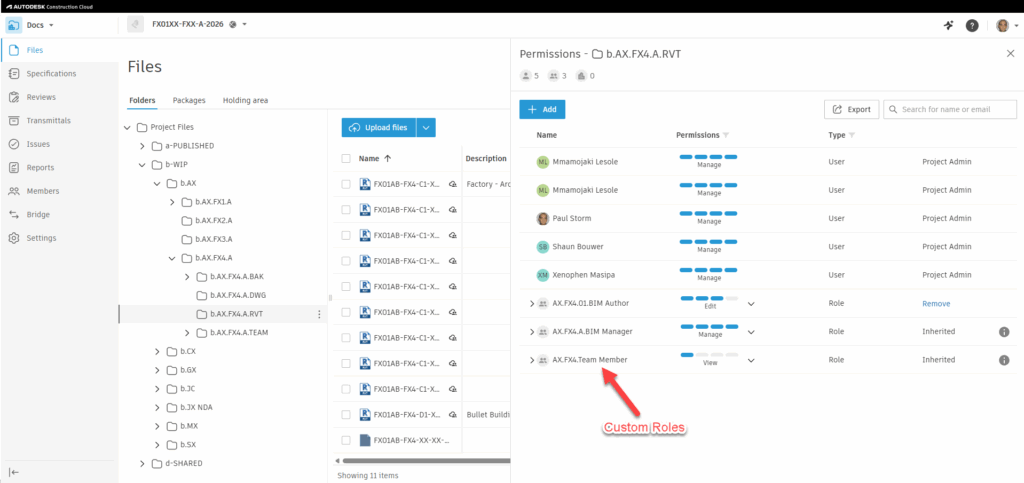
Creating custom roles to assign permissions to folders is the best strategy because one may then embed this within an AC project template. These responsibilities can then be rolled out across another project very quickly.
Bridges as a means of creating secure silos
In certain instances, you may wish to use bridges to share information in the form of an IFC file. This would be the case if you insist on maintaining total control of your intellectual property or if you are running officers distributed around the planet in different time zones and need to have some administrative independence within each office.

ACC Project Templates are rather useful and provided one approach them with an understanding of their limitations. Templates enable one to set up a project very quickly especially if the same consultants are used repetitively, and a generic naming of teams and assignment according to some protocol might make this a lot easier to control.

The Revit content catalog is a great resource that establishes a library that automatically provides later versions of the family that is uploaded and is available to everybody that has been given access to it.

specifications cannot be encapsulated within a template. Some specifications might be produced in a central repository from which it can be available to any project. However, specifications are usually relevant to one specific project and must be created on that project specifically.

The costing and forecasting module of the Build license allows one to understand the actual against the planned budgets and forecast changes and risk based on changes during the construction process.

Takeoff and Specification Codes
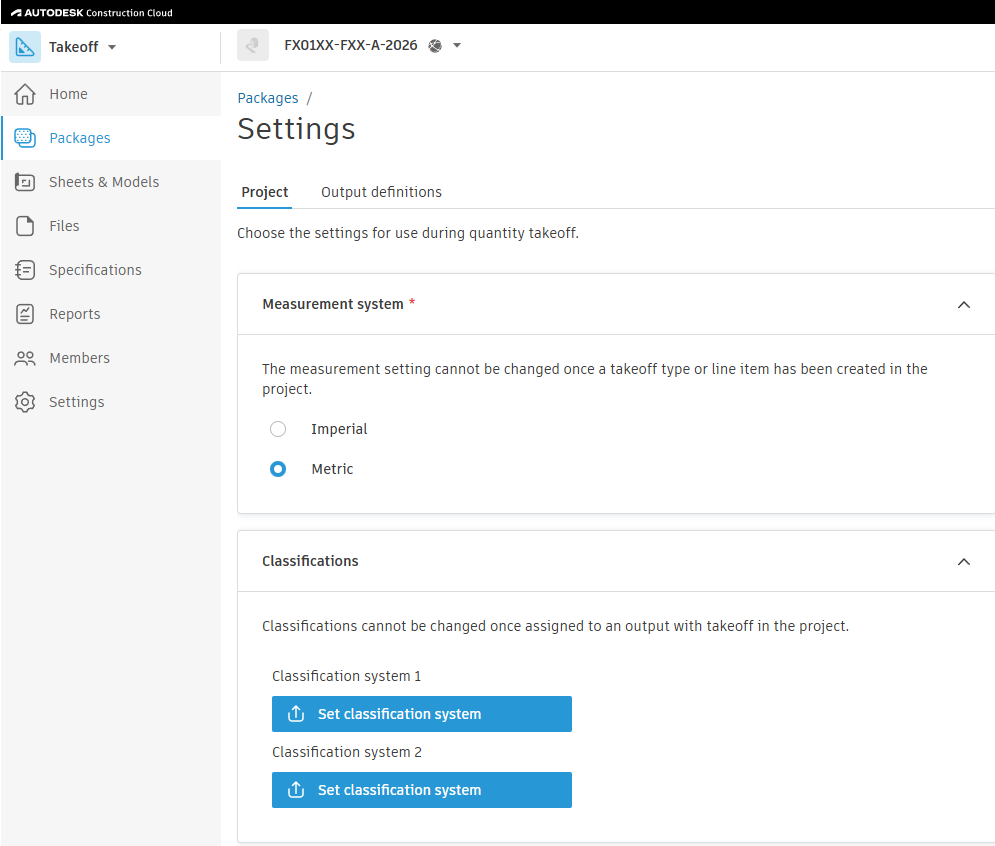
Takeoff can only afford one specification code, so it is therefore recommended that bridges are used to accommodate more than one specification.
If you need help adopting the AEC Collection or the Autodesk Construction Cloud in your practice or you are looking to invest in hardware, please contact Micrographics so that we may be of assistance.

