As electrical design projects continue to grow in complexity, maintaining accurate and standardised component data has become more important than ever. With AutoCAD Electrical 2027, Autodesk introduces enhanced support for the ECLASS Data Import Utility, making it significantly easier to import, validate, and manage manufacturer product data within your electrical design environment.
This enhancement is aimed at reducing manual data entry while improving the quality and consistency of electrical component libraries. By leveraging internationally recognised ECLASS standards, engineering teams can now work with reliable manufacturer data directly inside AutoCAD Electrical.
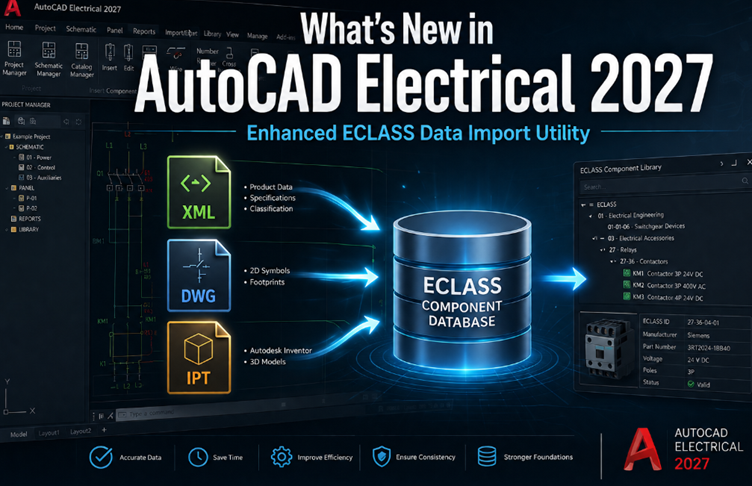
What is ECLASS?
ECLASS is an internationally recognised classification standard for manufacturing product information. It provides a standardised method of classifying and exchanging product data between manufacturers, suppliers, and engineering organisations.
Rather than manually creating electrical catalogue entries, manufacturers can provide standardised product information that includes:
- Product specifications
- Manufacturer part numbers
- Certifications
- Technical documentation
- Classification data
This ensures that engineering teams work from accurate, validated information throughout the design process.
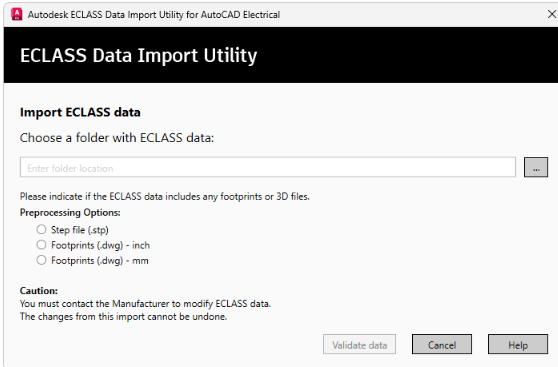
Introducing the ECLASS Data Import Utility
The enhanced ECLASS Data Import Utility in AutoCAD Electrical 2027 simplifies the process of importing manufacturer data directly into your component database.
The utility supports importing:
- XML files containing standardised ECLASS product data
- DWG files containing 2D symbols and footprints
- IPT files containing Autodesk Inventor 3D representations
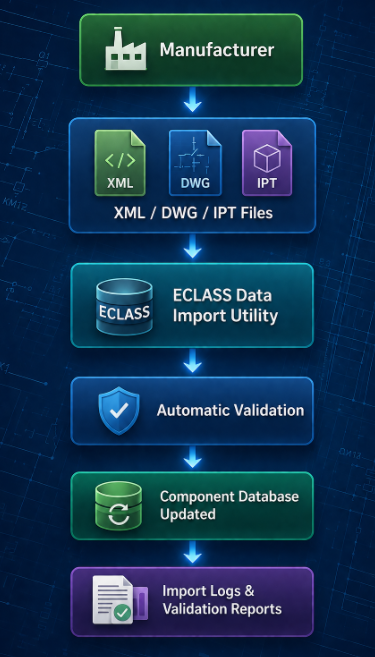
During the import process, AutoCAD Electrical automatically:
- Validates imported product data
- Updates the component database
- Generates detailed import logs
- Produces validation reports highlighting warnings or errors
This automated workflow eliminates much of the manual effort traditionally required when building or maintaining electrical component libraries.
Key Benefits
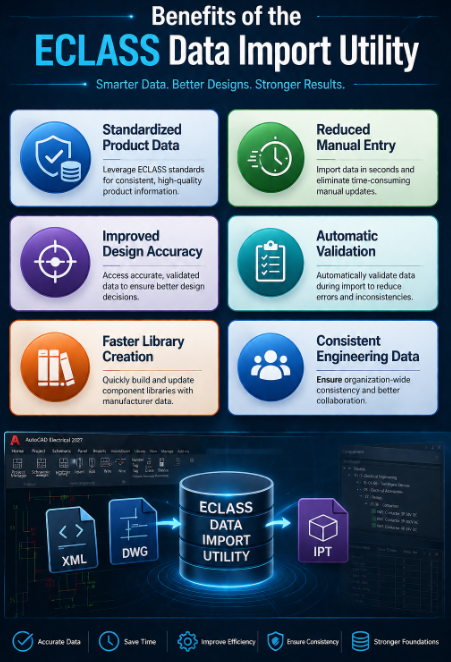
The improved ECLASS workflow delivers several advantages for engineering teams:
- Reduced manual catalogue creation
- Improved component data consistency
- Better design accuracy
- Faster deployment of manufacturer libraries
- Standardised product information across projects
- Easier maintenance of electrical component databases
By automating data validation and importing standardised manufacturer information, organisations can significantly reduce engineering time while improving the overall quality of their electrical designs.
| User Role | Requires an ECLASS License? | Purpose |
| Manufacturers & Suppliers | Yes | Create and publish ECLASS-compliant product data |
| Organisations publishing ECLASS data | Yes | Maintain standardised manufacturer information |
| AutoCAD Electrical Users | Yes | Import and use standardised ECLASS data within projects |
Important: Manufacturers, suppliers, and organisations that create or publish product data according to the ECLASS standard should contact ECLASS directly to obtain the appropriate paid ECLASS license. AutoCAD Electrical users who simply import and use standardised ECLASS data through the ECLASS Data Import Utility do not require an ECLASS publishing license.
Final Thoughts
The enhanced ECLASS Data Import Utility in AutoCAD Electrical 2027 represents a significant step toward smarter electrical design workflows. By supporting standardised manufacturer data, automated validation, and seamless integration of XML, DWG, and Inventor IPT files, engineering teams can spend less time managing component libraries and more time focusing on design.
Whether you’re maintaining large electrical libraries or integrating manufacturer-supplied data into new projects, this enhancement improves efficiency, consistency, and confidence throughout the entire electrical design process.
Supporting Smarter Digital Engineering
The enhanced ECLASS Data Import Utility also supports organisations pursuing greater digital standardisation across engineering teams. By enabling manufacturers to provide structured product data in a consistent format, designers can confidently reuse approved components across multiple projects while reducing the risk of duplicate or outdated catalogue information. This not only improves collaboration between manufacturers, suppliers, and design teams but also simplifies library maintenance over time. As product information evolves, updated ECLASS-compliant data can be imported efficiently, ensuring projects always reference the latest specifications and documentation. The result is a more streamlined engineering workflow that reduces administrative effort, accelerates project delivery, and supports higher-quality electrical designs through standardised, validated component information.